
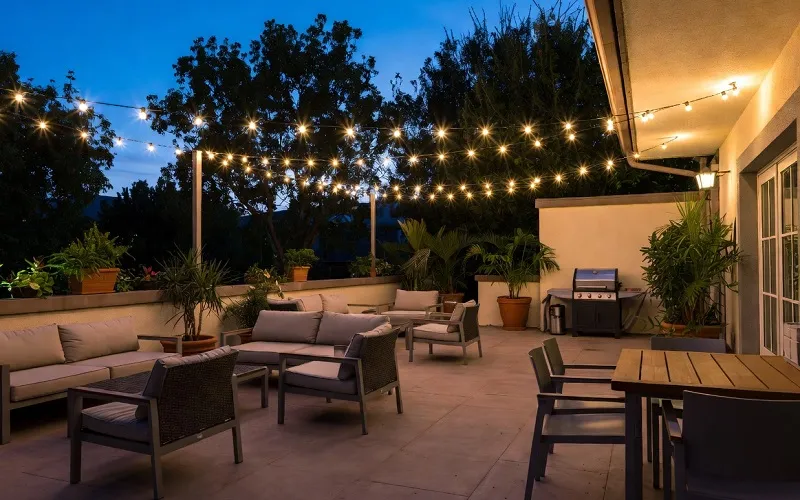
A well done patio is the cherry on top of the house. They allow for plenty of relaxation and entertainment while letting you and your family enjoy the outdoors.
It creates a practical, comfortable area where family and friends naturally want to spend time. Good design balances comfort, function, and visual appeal so the space stays useful for everyday use and larger gatherings.
Comfortable Seating That Encourages Conversation
Seating forms the foundation of any successful patio. Choose sofas, chairs, or benches that support longer stays without discomfort. Arrange the furniture so people face each other. This layout makes conversation easier and helps the space feel more inviting.
Leave clear walking paths between pieces. Guests should move freely without interrupting others or stepping over furniture. Place tables within easy reach for drinks and plates, but keep enough open space so people can stand and walk around. Flexible seating also helps when more guests arrive. You can shift chairs or add seating without making the area feel crowded.
Functional Layout with Clear Zones
Divide the patio into purposeful zones. Create separate areas for seating, dining, and movement. Clear zones give people options and prevent the space from feeling tight during larger gatherings.
Include a dedicated cooking area if you plan to grill. Position the grill near the dining zone so the host can cook while staying connected to guests. This arrangement keeps food service simple and helps meals stay hot. A thoughtful layout reduces unnecessary trips inside the house and improves the overall flow of the gathering. Most people have either charcoal grills or something else for cooking outside, depending on what they like to cook.
Creating an Inviting Atmosphere
Furniture, plants, and materials shape how the patio feels. Coordinate these elements so the space looks intentional rather than temporary. Consistent design choices help guests feel comfortable and welcome.
Lighting plays an important role after sunset. Soft overhead or string lighting improves visibility and safety. It also extends the usable hours of the patio and creates a more pleasant evening setting.
Outdoor Dining That Works Smoothly
A dedicated dining area makes outdoor meals more practical. Provide a sturdy table and enough seats for the usual group size. Keep essential items—plates, utensils, and serving pieces—nearby so the process stays organized.
Place the grill close to the table. This reduces the distance between cooking and serving. Guests remain part of the experience instead of waiting for food to arrive from the kitchen.
Flexible Space for Different Occasions
A well-planned patio adapts to changing needs. The same space that works for a quiet family dinner can host a birthday gathering or holiday meal. Flexible seating and an open layout make reconfiguration straightforward.
The patio can also support more than dining. Children can play nearby while adults talk. Guests can gather before or after meals. Adding a reliable outdoor grill expands options for both casual and more structured entertaining.
Long-Term Value for Homeowners
A thoughtfully designed patio adds lasting practical value. Families tend to spend more time outdoors when the space feels comfortable and functional. Guests notice the care put into the design, which strengthens the overall impression of the home.
Beyond social use, a well-executed outdoor area improves how the property functions day to day. It creates a reliable place for meals, conversation, and relaxation across seasons.
Final Thoughts
Well-designed patios succeed when they combine comfort, clear organization, and flexibility. Effective seating, practical zones, appropriate lighting, and convenient dining areas all contribute to a space people want to use. When these elements work together, the patio becomes a true gathering place rather than an underused outdoor surface.
Homeowners who plan with real daily use in mind—rather than appearance alone—typically get the most lasting benefit from the investment.
