
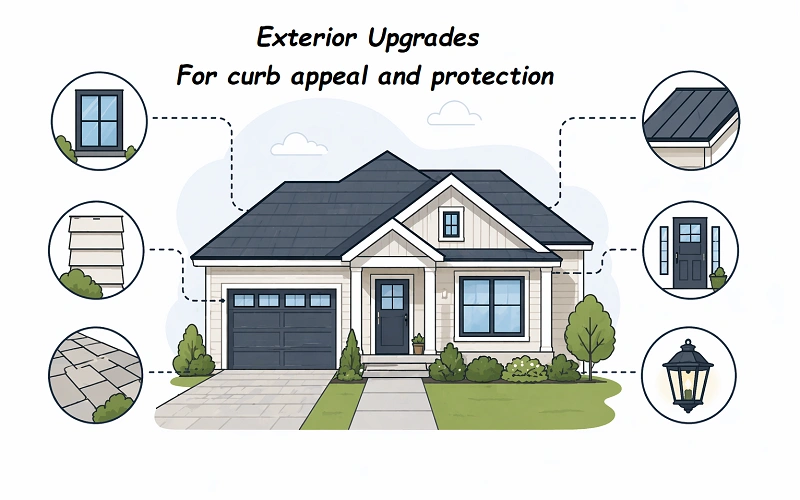
Every homeowner wants a property that looks sharp from the street. But in Tampa Bay, looking good is only half the equation. The weather here demands more from a home’s exterior than most places, and that means upgrades need to pull double duty. The best exterior improvements are the ones that make a house look better while quietly reinforcing it against everything nature throws its way. When curb appeal and protection work together, the result is a home that holds its value, stands up to the elements, and turns heads for all the right reasons.
The good news is that these two goals are no longer at odds. Modern materials and design options have made it easier than ever to invest in upgrades that check both boxes. From the roof down to the driveway, there are smart choices that strengthen a home without sacrificing an ounce of style.
Strengthening the View Without Losing the Light
Windows are one of the first things people notice about a house, and they play a massive role in how a home feels from the inside. The right windows frame a view, let natural light flood through a room, and give the exterior a clean, polished look. But beyond aesthetics, windows are also one of the most vulnerable points on any home, especially in areas prone to severe storms and high winds.
That is why impact windows have become one of the most popular upgrades for residents who refuse to choose between safety and style. Built with laminated glass and heavy-duty frames, impact windows absorb the force of airborne debris and extreme wind without shattering or buckling. For any homeowner who wants to invest in professional impact window installation Tampa Bay has excellent contractors ready to handle everything from precise measurements to final sealing and anchoring. These upgrades also reduce outside noise and help regulate indoor temperatures, making everyday life more comfortable regardless of the season.
What makes this kind of upgrade even more appealing is the range of styles available. Homeowners are not stuck with one generic look. Casement styles, sliding options, and fixed picture frames all come in impact-rated versions now.
Roofing That Does More Than Cover
A roof is arguably the most important protective feature on any home, yet it is also one of the biggest visual elements. A worn-out or mismatched roof drags down the entire appearance of a property, no matter how well-maintained the rest of the exterior might be. On the other hand, a fresh roof with the right material and color can completely transform how a house looks from the curb.
Metal roofing has gained serious traction in recent years for good reason. It holds up against high winds, resists moisture damage, and lasts significantly longer than traditional asphalt shingles. It also comes in a wide variety of colors and profiles, making it easy to match any architectural style. Tile roofing is another strong option, offering a classic appearance along with excellent durability. Both choices add visual character while quietly doing the heavy lifting when it comes to storm resistance.
Siding That Stands Up to the Elements
Siding wraps the entire body of a home, which makes it one of the most visible exterior features. It is also the first line of defense against rain, wind, humidity, and sun exposure. Choosing siding based on looks alone is a mistake that catches up with homeowners quickly, especially in climates where moisture and heat are constant factors.
Fiber cement siding has become a go-to choice for homeowners who want the appearance of wood without the maintenance headaches. It resists warping, cracking, and pest damage while holding paint longer than most alternatives. It also performs well in humid conditions, which is a critical factor for coastal and subtropical homes. Vinyl siding has also improved dramatically, with thicker gauges and better locking systems that resist wind uplift during storms.
Entryways That Set the Tone
The front door and the area surrounding it create the first impression for anyone approaching a home. A strong entryway does more than welcome guests. It signals that the home is well cared for and built to last. Upgrading a front door to a reinforced fiberglass or steel option adds a layer of security while offering design flexibility that suits nearly any home style.
Hardware choices matter here, too. Heavy-duty hinges, multipoint locking systems, and reinforced frames all contribute to a more secure entry without making the door look like it belongs on a bunker. Decorative glass inserts, sidelights, and transom windows can all be incorporated using laminated or tempered glass for added safety.
Beyond the door itself, the entryway area benefits from thoughtful details. A covered porch or portico not only adds architectural interest but also shields the door and threshold from direct weather exposure.
Hardscaping and Exterior Surfaces
Driveways, walkways, and patios often get overlooked in conversations about curb appeal, but they cover a large portion of a property’s visible area. Cracked concrete and uneven pavers send the wrong message and can also create drainage problems that affect the foundation over time.
Replacing a standard concrete driveway with stamped or stained concrete adds visual depth and texture without a dramatic increase in maintenance. Interlocking pavers are another excellent option, offering a clean, tailored look along with natural drainage between joints. These materials hold up well under heavy use and resist cracking better than poured slabs in areas where the ground shifts or settles.
Exterior Lighting and Finishing Touches
Lighting is one of the most underrated exterior upgrades. A well-lit home looks more inviting after dark and discourages unwanted activity around the property. Pathway lights, uplighting on architectural features, and motion-activated fixtures around entry points all contribute to a safer and more attractive exterior.
Choosing fixtures that complement the home’s style keeps the look intentional rather than purely functional. Lantern-style wall mounts work well on traditional homes, while sleek, low-profile options suit modern designs. Solar-powered and LED options keep energy costs low while delivering consistent performance.
