
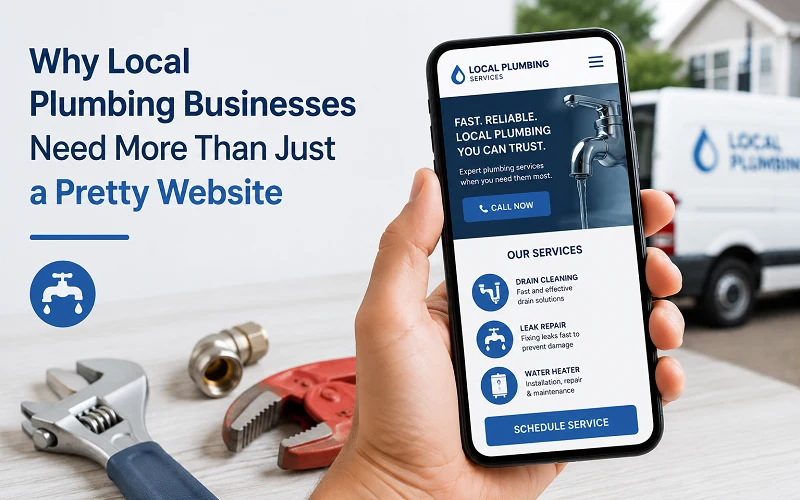
Most homeowners searching for a plumber make a decision quickly. They open a few websites, compare reviews, check service areas, and call the company that feels the most reliable. That process usually takes only a few minutes. A polished website can help create a good first impression, but appearance alone rarely convinces someone to book a service appointment.
Many plumbing companies invest heavily in design while overlooking the things customers actually care about. People want fast loading pages, clear pricing information, easy contact options, and proof that the company knows what it’s doing. They also expect websites to work smoothly on mobile phones because that’s where most local searches happen.
A website should help a plumbing business attract local customers, answer common questions, and turn visitors into booked jobs. Without those pieces in place, even the best-looking site struggles to deliver real results.
Local Search Drives Better Customers
Traffic alone does not help a plumbing business grow. The real goal is attracting people nearby who are actively searching for services. Local search visibility plays a huge role in whether a company receives consistent calls from homeowners in its service area.
Google Business Profile optimization helps plumbing companies appear in map results where many customers begin their search. Location-specific pages also improve visibility because they show search engines exactly where the business operates. A generic service page rarely performs as well as content tailored to specific cities or neighborhoods.
Many plumbing companies struggle to manage local SEO consistently while also running day-to-day operations. In those situations, a plumbing lead generation company can help improve local rankings, build targeted service pages, and create strategies that attract qualified customers instead of random website traffic.
Why Mobile Experience Matters
Most people searching for plumbers use their phones. They search while at work, during emergencies, or while dealing with problems around the house. A website that feels difficult to use on mobile devices creates frustration almost immediately.
Small text, broken layouts, and hard-to-click buttons make visitors leave fast. Customers want simple navigation and fast access to contact information. Many users never scroll far down a page. They expect to see service details and phone numbers near the top.
Mobile-friendly websites also help local search rankings. Search engines favor websites that perform well across devices because they create a better experience for users. Plumbing businesses that ignore mobile usability often lose opportunities without realizing it. A clean mobile layout helps customers contact the company quickly and keeps the entire process simple.
Calls-To-Action Should Feel Natural
Many plumbing websites bury their contact options under long paragraphs or cluttered layouts. Visitors should never have to search for ways to schedule service. Clear calls-to-action guide users naturally through the website and help them take the next step without confusion.
Simple phrases such as “Schedule Service,” “Request a Quote,” or “Call Now” work better than vague marketing language. Placement also matters. Contact buttons should appear throughout important pages, especially on mobile devices where users expect quick access.
Good calls-to-action also match the customer’s situation. Someone dealing with an emergency wants immediate help, while another visitor may want pricing details or service information first. Plumbing websites perform better when they support different types of customer intent instead of pushing every visitor through the same path.
Helpful Service Pages Build Trust
Many plumbing websites list services with only a few short sentences. That approach leaves customers with unanswered questions and weakens search visibility. People want useful information before they make a call, especially for expensive or urgent repairs.
Strong service pages explain what the problem is, how plumbers typically fix it, and when homeowners should seek professional help. Customers also appreciate details about timelines, inspection processes, and what to expect during a service visit. This kind of information helps reduce hesitation because visitors feel more informed.
Search engines also favor pages that provide depth and relevance. Detailed content gives Google more context about the services offered and the locations served. Plumbing businesses that invest in quality service pages often attract visitors who are already prepared to schedule work.
Reviews Influence Buying Decisions
Homeowners usually read reviews before contacting a plumber. They want reassurance that the company shows up on time, communicates clearly, and handles problems professionally. A strong review profile helps customers feel more comfortable reaching out, especially when several local businesses offer similar services.
Recent reviews matter more than old ones because they reflect the company’s current service quality. Customers also pay attention to how businesses respond to complaints. Calm and professional responses often leave a better impression than silence.
Reviews support local search visibility as well. Google uses review signals to understand how active and trustworthy a business appears online. Plumbing companies should regularly ask satisfied customers for feedback after completed jobs. Consistent reviews help websites earn trust naturally and give future customers a clearer picture of the service experience.
Better Landing Pages Increase Ad Performance
Paid advertising can drive traffic quickly, but many plumbing companies waste money by sending visitors to weak landing pages. A generic homepage rarely answers the specific questions someone has after clicking an ad for drain cleaning, leak repair, or water heater installation.
Effective landing pages stay focused on one service and one goal. They explain the problem clearly, describe the solution, and make it easy for visitors to contact the company. Strong pages also include trust signals such as customer reviews, service guarantees, and real photos.
Consistency matters as well. The messaging in the ad should match the content on the landing page. When visitors immediately find the information they expected, they are more likely to stay on the site and request service instead of returning to search results.
A good-looking website helps create a positive first impression, but plumbing companies need far more than visual design to compete online. Customers expect fast-loading pages, mobile-friendly layouts, clear service information, and simple ways to make contact. They also want proof that the company is reliable before they pick up the phone.
Strong websites support the entire customer journey. They help local homeowners find the business, understand the services offered, and feel confident enough to schedule an appointment. Features such as local SEO, lead tracking, customer reviews, and detailed service pages all contribute to better results over time.
Plumbing businesses that treat their website as a business tool instead of a digital brochure usually see stronger growth, better lead quality, and more consistent customer inquiries.
