
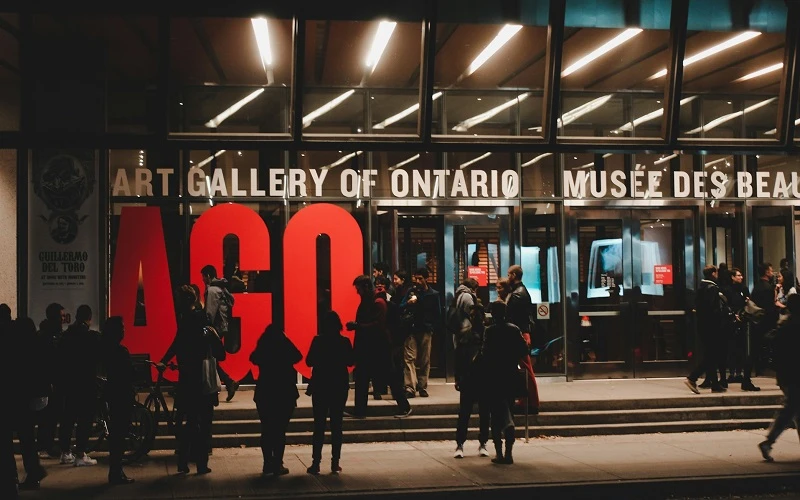
Few celebrities are as publicly tied to their hometown as Drake. Long before “The Embassy,” his sprawling Bridle Path estate, became the address most associated with his name, Drake grew up in Forest Hill, a neighborhood in midtown Toronto that shaped much of his early identity and continues to surface in his music and interviews. His relationship with the city is not a marketing angle. It shows up in his lyrics, his music videos, and the neighborhoods he keeps returning to, both literally and creatively.
That deep, ongoing tie to specific streets and neighborhoods is worth examining, because it touches on something bigger than one celebrity’s biography. It points to a concept sociologists call the “third place,” and it turns out Drake’s relationship with Toronto is a pretty good case study in why that idea matters, and why it keeps showing up in conversations about how cities function well beyond the music industry.
A Star Who Never Left, Even When He Could Have
Drake has had every opportunity to relocate permanently to Los Angeles or Miami, as many artists of his stature eventually do. Instead, he built his primary residence in Toronto, and has been vocal for years about staying rooted there rather than following the more typical path of his peers. His childhood home in Forest Hill, his years at Forest Hill Collegiate, and the specific streets and landmarks referenced throughout his discography all point to an artist whose identity is inseparable from a set of very specific places, not just a city in the abstract.
That specificity is worth paying attention to. It is not simply that Drake likes Toronto. It is that particular neighborhoods, streets, and spaces within it clearly mean something to him personally, in a way that a generic sense of hometown pride does not fully explain.
What Sociologists Call the “Third Place”
There is a term for the kind of space that becomes personally significant in exactly this way. In 1989, sociologist Ray Oldenburg coined the phrase “third place” in his book The Great Good Place, describing informal public settings, cafés, parks, barbershops, corner stores, that exist outside of home (the first place) and work (the second place). According to summaries of Oldenburg’s research from the Brookings Institution, these spaces function as low-pressure gathering points where people build a sense of community and belonging simply through repeated, casual presence, not obligation.
Third places matter because they are where identity gets built outside of the roles people are assigned at home or at work. For a public figure like Drake, whose relationship to fame has always been tightly wound around specific Toronto streets and neighborhoods, that concept maps unusually well onto his own story.
Why This Matters Beyond One Celebrity’s Story
The importance of these informal social spaces is not just a sociological theory. According to the Government of Canada, social isolation and disconnection have become significant public health concerns, with researchers increasingly linking weak social ties to declines in both mental and physical wellbeing. Places that allow for easy, low-obligation social contact, the kind Oldenburg described decades ago, are part of what helps counter that isolation.
This is part of why Toronto’s own third places, its cafés, ravines, markets, and neighborhood main streets, have seen renewed interest from residents in recent years. People are not just nostalgic for pre-pandemic routines. They are actively seeking out spaces that ask nothing of them except presence, the same quality that made Drake’s own neighborhood roots so central to his identity long before “third place” became a phrase people used casually.
Toronto’s Own Version of the Trend
A closer look at the resurgence of the third place explores exactly this shift, examining how cafés, parks, markets, and walkable neighborhoods across Toronto are shaping not just how residents spend their time, but where they choose to live. The piece traces how areas like Kensington Market and St. Lawrence Market function as modern third places, and how that quality increasingly factors into decisions about where people put down roots in the city.
What Drake’s Story Ultimately Reveals
Whether or not Drake has ever used the term “third place” himself, his relationship with Toronto reflects exactly the dynamic Oldenburg described: an attachment to specific, repeatable, meaningful spaces that shaped who he became, long before wealth or fame changed what was available to him. Forest Hill was not just a childhood address. It was the backdrop against which an entire identity formed.
That is worth remembering the next time a celebrity’s hometown loyalty gets dismissed as sentimental branding. Sometimes it is simply proof that the places people return to, physically or emotionally, say more about them than almost anything else.
