
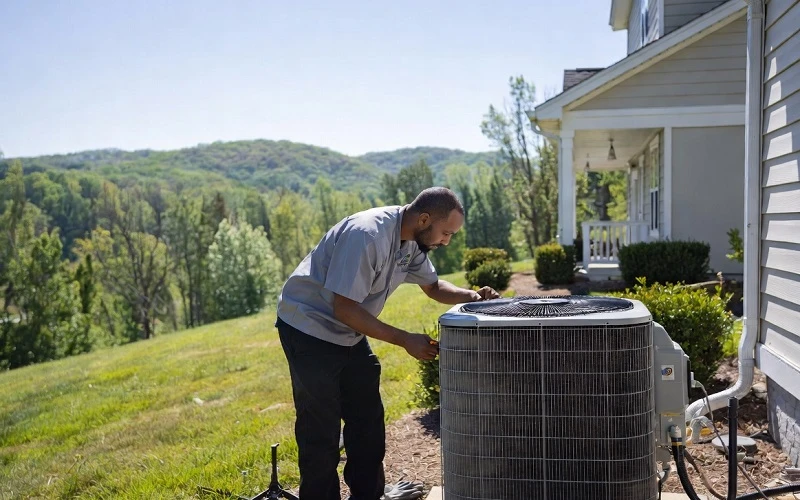
East Tennessee’s climate delivers dramatic seasonal swings. Summer temperatures regularly exceed 90°F with oppressive humidity, while winter brings freezing conditions that test heating systems. Homeowners in Athens, Englewood, and Madisonville who follow proactive maintenance schedules avoid emergency repairs and extend equipment lifespan.
Spring Preparation (March–May)
Before cooling season begins:
- Schedule professional AC inspection and tune-up
- Replace air filters (monthly during heavy pollen season)
- Clear debris from outdoor condenser unit
- Test thermostat accuracy and programming
- Inspect ductwork for winter damage or pest intrusion
Spring maintenance identifies issues before summer demand peaks. Technicians check refrigerant levels, clean evaporator coils, and test electrical components. Addressing problems in March prevents July emergency calls when thermostat installation services providers face maximum demand.
Summer Vigilance (June–August)
Monitor system performance during peak load:
- Verify consistent cooling throughout home
- Listen for unusual noises from indoor or outdoor units
- Check condensate drain for clogs (humidity generates significant moisture)
- Keep outdoor unit clear of vegetation and debris
- Monitor energy bills for unexpected increases
When systems struggle during heatwaves, 24/7 emergency service becomes essential. Local providers with local East Tennessee expertise understand that Tennessee humidity compounds heat stress, making rapid response critical for vulnerable residents.
Fall Transition (September–November)
Prepare heating systems before cold weather arrives:
- Schedule furnace or heat pump inspection
- Replace filters and clean blower components
- Test ignition systems and safety controls
- Inspect heat exchangers for cracks (carbon monoxide risk)
- Verify thermostat switches properly between heating and cooling
Winter Protection (December–February)
Protect systems during freezing conditions:
- Keep outdoor heat pump units clear of snow and ice
- Monitor auxiliary heat usage (indicates potential heat pump issues)
- Check for drafts around windows and doors that increase heating load
- Maintain consistent temperatures (frequent setbacks strain systems)
Year-Round Best Practices
Regardless of season, change filters every 30-90 days, keep vents unobstructed, and schedule bi-annual professional maintenance. Document all service for warranty compliance and resale value. Consider energy efficiency rebates when upgrading equipment—many programs have seasonal application windows.
Conclusion
Proactive maintenance transforms HVAC systems from unpredictable expenses into reliable infrastructure. Partnering with HVAC maintenance plans providers ensures your home stays comfortable through every East Tennessee season.
