
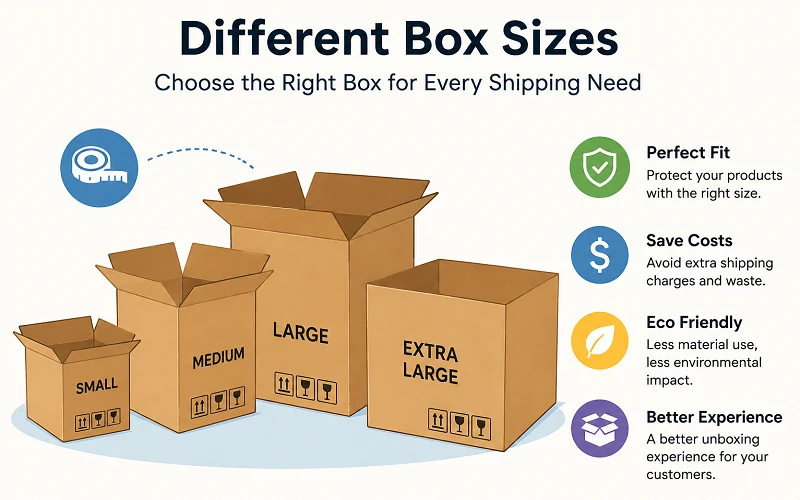
Selecting the right box is one of the most practical decisions in shipping. With so many different box sizes on the market, it can be confusing to choose the one that best matches your needs. The correct size and style protect products, control costs, reduce waste, and improve the unboxing experience. With so many options available, matching the box to the product and shipping purpose makes a clear difference in both efficiency and customer satisfaction.
Whether you are sending small retail items, subscription products, or larger goods, the principles remain the same: measure accurately, allow for protective packaging, and choose a box that balances protection with economy.
Why the Right Box Matters
A box that is too large increases shipping charges through dimensional weight pricing and requires extra void-fill material. A box that is too small may not leave room for cushioning and can put pressure on the product. The ideal fit reduces damage, lowers material use, keeps costs predictable, and supports a better customer experience.
Choosing appropriately also aligns with more responsible packaging practices by limiting excess waste.
Main Types of Boxes for Different Shipping Needs
Different box styles serve different purposes:
Product Boxes Best for retail presentation or individual item packaging. Available in a wide range of sizes, from very small formats for accessories to larger options for bulkier products.
Mailer Boxes Popular for subscription boxes, gifts, and branded deliveries. They usually offer a clean exterior suitable for printing and come in compact to mid-large sizes.
Shipping Boxes Designed for durability and general parcel shipping. These prioritize strength and can handle everything from small parts to heavier or larger items.
Many suppliers offer fully customizable dimensions within these categories, allowing boxes to be tailored to exact product measurements rather than forcing items into standard sizes.
How to Measure Your Product for the Best Fit
Accurate measurement is the foundation of good box selection:
- Measure the product Record the length, width, and height (or depth) of the item in its ready-to-ship condition, including any inner packaging already in place.
- Add clearance Allow about ¼ inch (0.6 cm) of extra space on each side. This gap provides room for protective materials such as bubble wrap, foam, or paper without creating a loose fit.
- Select the internal box dimensions Choose a box whose interior measurements are just slightly larger than your adjusted product size. The goal is a secure fit that prevents shifting while still allowing cushioning.
Taking a few extra minutes to measure carefully usually reduces both damage rates and material waste.
Material Options to Consider
The material affects protection, appearance, and cost. Common choices include:
- Standard corrugated cardboard — Durable and economical for everyday shipping.
- Premium white corrugated — Smoother surface that accepts sharper printing, useful when appearance matters.
- Kraft (brown) corrugated — Natural look often preferred by brands focused on sustainability or a more organic aesthetic.
Different flute strengths are available depending on the weight and fragility of the contents.
Practical Steps When Ordering Custom Boxes
When ordering custom packaging, the process generally follows these steps:
- Decide on the box style (product, mailer, or shipping).
- Enter the required interior dimensions based on your measurements.
- Select the material and decide which panels will be printed.
- Choose quantity and production timeline (standard or faster turnaround).
- Review the design in a preview tool if available.
- Confirm details before placing the order.
Many suppliers offer sample boxes so you can check construction, print quality, and fit before committing to a larger run. Minimum order quantities can start as low as one unit for testing, though unit cost is usually lower at higher volumes.
Production times for custom boxes commonly range from about 10–15 business days for standard orders, with rush options available for tighter deadlines. Shipping time depends on the destination and selected carrier service.
Final Thoughts
Choosing the right box for every shipping need comes down to three practical factors: accurate measurement, appropriate style, and suitable material. A well-matched box protects the product, controls shipping costs, reduces packaging waste, and contributes to a stronger brand impression when the package arrives.
By measuring carefully, allowing proper clearance, and selecting a box that fits both the product and the purpose of the shipment, businesses can improve logistics efficiency while delivering a more professional experience to their customers.
